
Isa
Find a plant detail, take a photo, and leave a clue for the gallery.
A small family science project: watch tomatoes, peppers, and snow peas grow, save field notes, and use a tiny sensor kit to find out what the rooftop is telling us.
Take a rooftop photo, choose who took it, write one short note, and save it into the gallery.
Find a plant detail, take a photo, and leave a clue for the gallery.

Choose a rooftop discovery, take a photo, and add your note.
The first real subjects are tomatoes, hot peppers, and snow peas. The exact pepper variety still needs a photo or label check, so the site treats it as a mystery pepper for now.
Likely beefsteak-style tomatoes: big fruit, big leaves, and a plant that needs support as it grows taller.
Could be banana peppers, Hungarian hot wax, or another long pepper. A photo will help us identify them.
Cool-season climbers. They are fun because kids can watch tendrils grab supports like tiny hands.
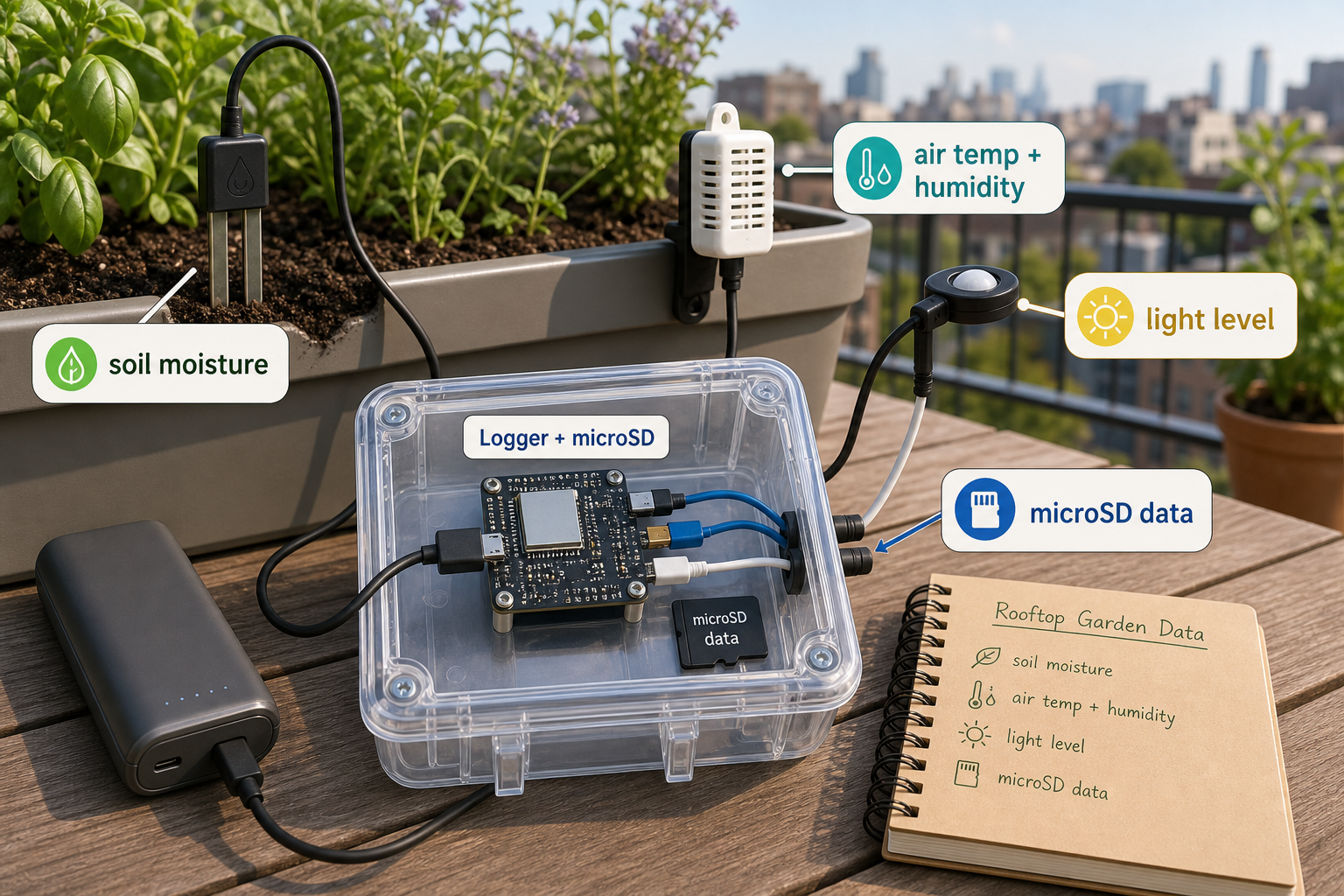
The sensor kit does not "solve" the garden. It gives clues. The kids still do the scientist part: noticing, guessing, comparing, and asking better questions.
The sensor parts are ordered. We start with a website and a mission board.
Pick plant names, make first guesses, and draw what the field kit will do.
Build the logger indoors first. No rooftop test until the bench test works.
Try one short rooftop reading and compare tomato versus pepper clues.
One tomato and one pepper. Give them public-safe garden names, not people names.
Which plant will be hotter? Which soil will be drier? Which one gets more sun?
Box -> soil probe -> light sensor -> air sensor -> microSD card. The drawing becomes the first lab artifact.
Example: "Why are the pepper leaves smaller?" or "Does the wall make this pot warmer?"
The project can grow slowly: first a garden journal, then a sensor notebook, then a tiny public science page, then a data story the kids can explain to someone else.
Choose plant names, draw the field kit, compare leaves, and write first predictions.
Run short sensor sessions. Compare tomato, pepper, and snow pea spots.
Turn readings into simple charts. Ask what changed after watering, heat, or rain.
Turn garden photos, predictions, and readings into one clear weekly story.
Choose a new experiment: shade versus sun, watered versus dry, or tomato versus pepper.
Isa takes one photo, then Sia takes one photo. Keep the game moving.
One short sentence is enough: "I saw a tiny pepper," or "This leaf is huge."
Before saving, make sure the photo is okay for the family garden page.